Your Brain on AI: MIT Writing Study Analyzes Neural Effects of ChatGPT Usage
November 2025
By Arya Choudhury
Edited by Riley Erben
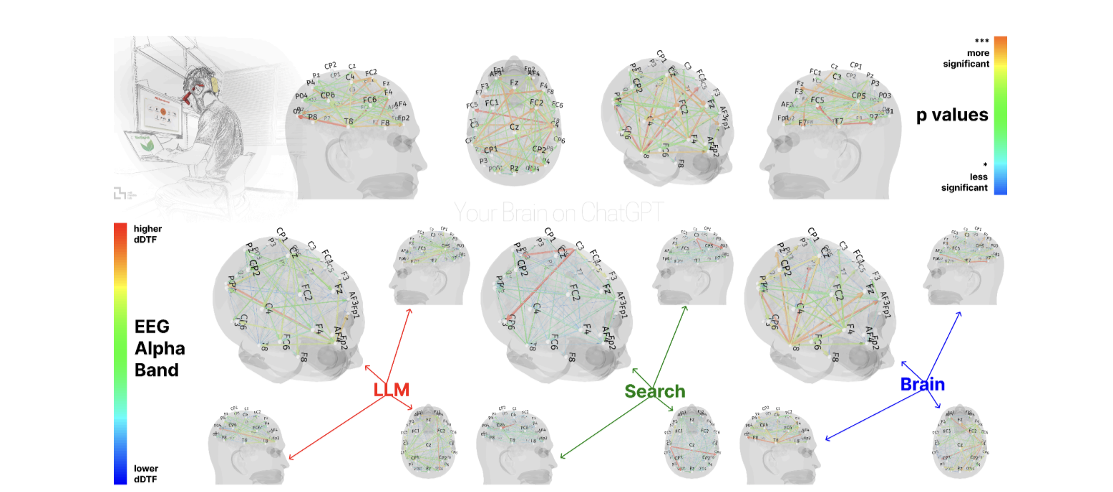
Figure 1: Neural connectivity map for individuals in each test group.
The Setup
54 college students from the Boston area were split into three groups, with subjects varying in age, educational attainment, and gender (Kos’myna, et al.). The three groups were:
LLM-only (Group 1) – Only allowed to ask ChatGPT as their source of information for writing their essay.
Search Engine (Group 2) – Able to use Google and other search engines, but couldn’t use ChatGPT or other AI models for research.
Brain-only (Group 3) – Not allowed to use AI or internet (search engines) to research at all, only allowed to use pre-existing knowledge.
All subjects had an electroencephalograph (EEG), a tool tracking electrical activity in the brain (Mayo Clinic), attached to their heads, and scientists monitored EEG activity across the study. Across 3 sessions, subjects had three essay prompts to choose from per session, pulled from past SAT essay questions, and wrote one. Subjects were interviewed post-session about their experience and asked to quote parts of their essay.
In a voluntary 4th session, subjects in Groups 1 and 3 swapped – i.e. Brain-Only subjects became LLM-only, and LLM-only subjects became Brain-Only. In session 4, subjects chose from prompts they had already written about (i.e. chosen across sessions 1-3).
The Results
EEG analysis revealed that neural connectivity (communication between brain areas)was highest in the Brain-Only group, and decreased the more assistance subjects got (i.e. Groups 1 and 2). Search Engine subjects used their visual processing networks more actively than LLM-only subjects, and LLM-only subjects engaged less-complex, more-automated connections while working. Notably, the Brain-only group also used networks involved in creativity and logic the most relative to the other groups.
In terms of quoting ability, the pattern was very similar to the EEG results. Brain-Only subjects quoted their work most accurately, with Search-Engine subjects faltering and LLM-Only users sometimes being completely unable to quote their writing (Graph 1). LLM-only subjects also had contradictory feelings over perceived “ownership” of their work, whereas Brain-Only subjects felt high ownership of their work (Graph 2).
Graph 1, the percentage of subjects that were unable to accurately quote their work, compared across the three subject groups. LLM-Only is in red, Search Engine in green, and Brain-Only in blue (Kos’myna, et al.).
Graph 2, varying groups’ perceived ‘ownership’ over their essays. Blue is “full ownership”, and purple is “no ownership” (Kos’myna, et al.), with colors in-between.
In Session 4, LLM-Only to Brain-Only (LLM-to-Brain) subjects improved connectivity and quoting ability significantly, but couldn’t attain the network strength that Brain-Only subjects had by Session 3. Interestingly, Brain-to-LLM subjects performed better than before with AI assistance, and had increased connectivity. This differs from the original LLM-Only subjects across Sessions 1-3, where LLM usage actually reduced neural connectivity over time. (Kos’myna, et al.).
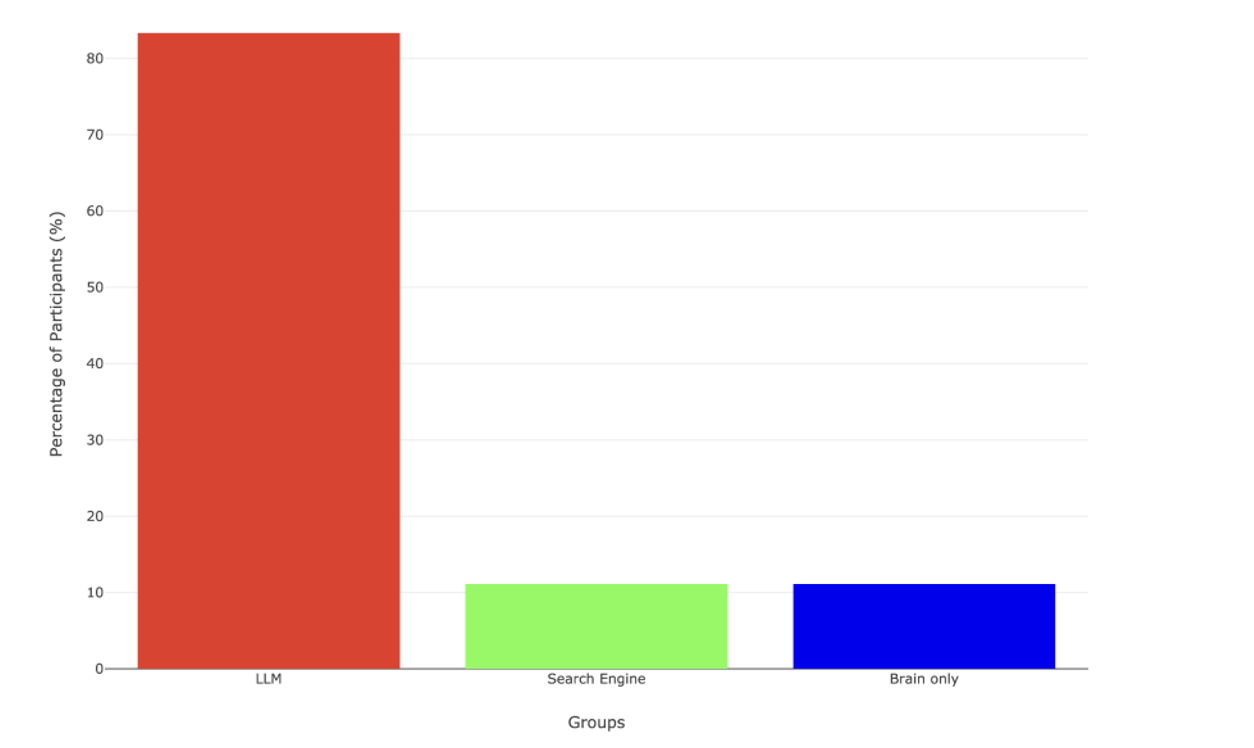
Graph 1: Percentage of subjects unable to accurately quote their work (Kos’myna, et al.)
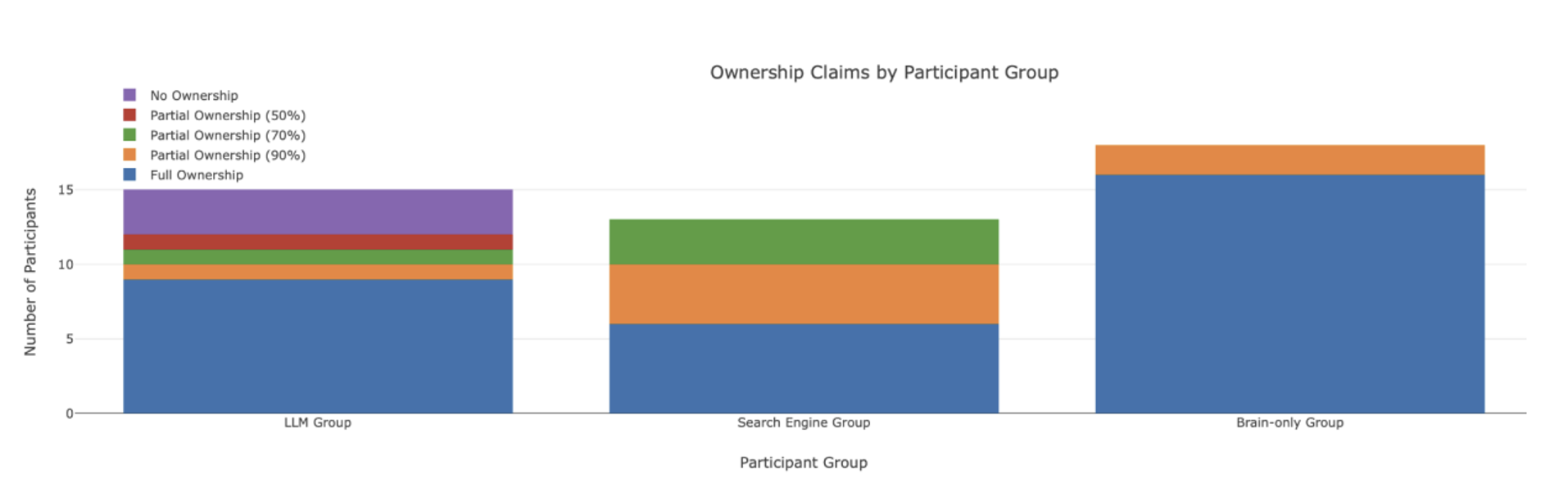
Graph 2: Groups’ perceived ‘ownership’ over their essays (Kos’myna, et al.)
The Implications
So, what does this mean for ChatGPT users?
Immediately, this study suggests that starting with ChatGPT for academic work harms long-term neural connectivity, and that instead building research/writing skills before using ChatGPT could help most. It also demonstrates that AI usage, even for simple tasks, can affect our memory encoding and alter our brain structure. But, on a larger scale, this paper is the first step of many into studying AI’s effect on the brain, and a warning that dependence may not be brain-healthy. Though more research is needed, it’s clear that ChatGPT is here to stay, and that it’s becoming more important in students’ lives. Whether AI usage turns out to be helpful or harmful, staying educated about its effects on learning should be among students’ first considerations.
Sources:
EEG (electroencephalogram) - Mayo Clinic. (n.d.). https://www.mayoclinic.org/tests-procedures/eeg/about/pac-20393875
Kos’myna, N. et al. Your Brain on ChatGPT: Accumulation of Cognitive Debt when Using an AI Assistant for Essay Writing Task – MIT Media Lab. MIT Media Lab. https://www.media.mit.edu/publications/your-brain-on-chatgpt
Kosmyna, N., Hauptmann, E., Yuan, Y. T., Situ, J., Liao, X., Beresnitzky, A. V., Braunstein, I., & Maes, P. (2025). Your Brain on ChatGPT: Accumulation of Cognitive Debt when Using an AI Assistant for Essay Writing Task. arXiv (Cornell University). https://doi.org/10.48550/arxiv.2506.08872